
Automatic Billiard & Snooker Table Light Control
The light over a billiard or snooker table should follow the game, not the staff. In 8BallPOS the table light switches on when the cashier starts the session and off when it stops — including fixed-time games that end by themselves — so nobody plays without a running timer and no light burns over an empty table.
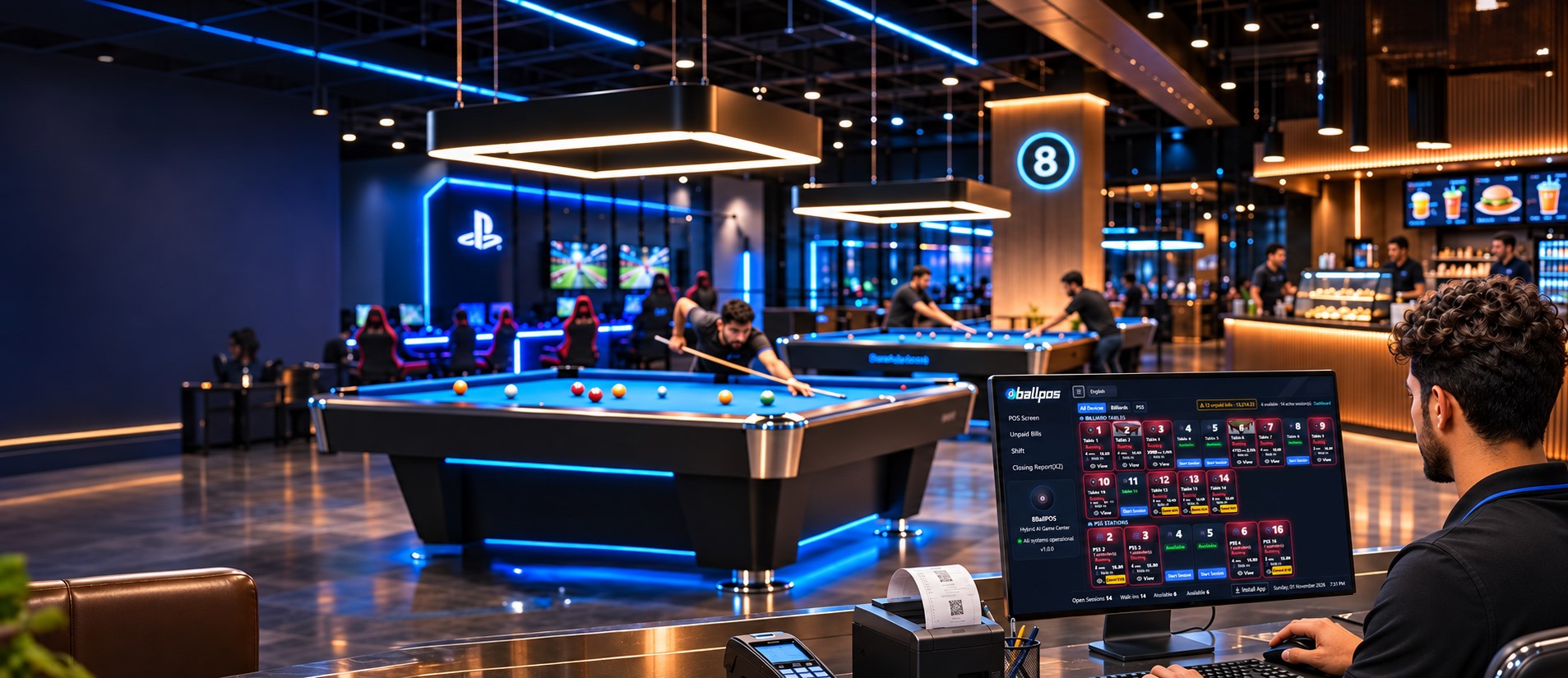
What you get
Light Follows the Session
Start a session and the table light switches on; stop it and the light switches off. Fixed-time and prepaid sessions switch the light off by themselves when the time is used.
8BallPOS Light Controller
Each table is mapped to its own controller channel in the app, and the controller switches the table light circuits directly.
Venue Agent, No Open Ports
A small agent on a PC inside the club collects commands from 8BallPOS over an outbound connection, so the server never needs access to your network.
Confirmed, Not Assumed
The floor screen shows whether each light actually switched, from the agent's acknowledgement: lit, off, or asked but not answered.
Stale Commands Expire
A command that is not collected in time expires instead of firing late, so a controller that reconnects cannot switch a table that has moved on.
Tables, Consoles and Courts
The same controller switches PS5 screens, gaming PC power and tennis court floodlights, wherever control hardware is installed.
How the billiard table light controller works
The automation is one straight chain: GAME STARTS → LIGHT ON → TIMER RUNS → GAME ENDS → LIGHT OFF. When a cashier starts a session, 8BallPOS queues a command for that table. The venue agent collects it, switches the table's controller channel on and the light comes on. When the session stops, or a fixed-time game reaches its last minute, the command is reversed and the light goes off.
The agent reports back what the controller actually did, so the floor screen shows a light that failed to switch differently from one that is simply off. That is the difference between automation you can trust at closing time and automation you have to check by walking the floor.
- Each table mapped to its own controller channel in the app
- Session start, stop and auto-stop drive the same command queue
- Every command acknowledged and logged for audit
- Unclaimed commands expire, so nothing switches late
Snooker, pool and billiard light automation
Snooker tables, English pool and American pool tables are wired the same way: each table has its own controller channel, its own rate and its own session, so a snooker table and a pool table can run side by side in one club. Moving a game to another table moves the session, and the lights follow it.
The same controller also switches PlayStation and PS5 screens, gaming PC power and tennis court floodlights, so a mixed venue runs one light and power automation system rather than one per area.
Installation and hardware
The 8BallPOS light controller is installed next to the lighting circuits and connected to a PC inside the club. The 8BallPOS agent runs on that PC as a Windows startup task: it starts before anyone logs in and restarts itself if it closes.
The controller is wired, not wireless: the controller switches the existing light circuits directly, and only the link between the agent PC and 8BallPOS uses the network. Tell us how many tables you run and we will specify the controller for your club.
Why operators choose it
- No game starts without the timer, because the light only comes on with the session.
- Lights stop running over empty tables, which shows on the electricity bill.
- Play ends when the session ends: the light goes off with it.
- Every switch is logged, so a disputed bill can be checked against the record.
- The agent starts with Windows and restarts itself if it closes, with nobody logged in.
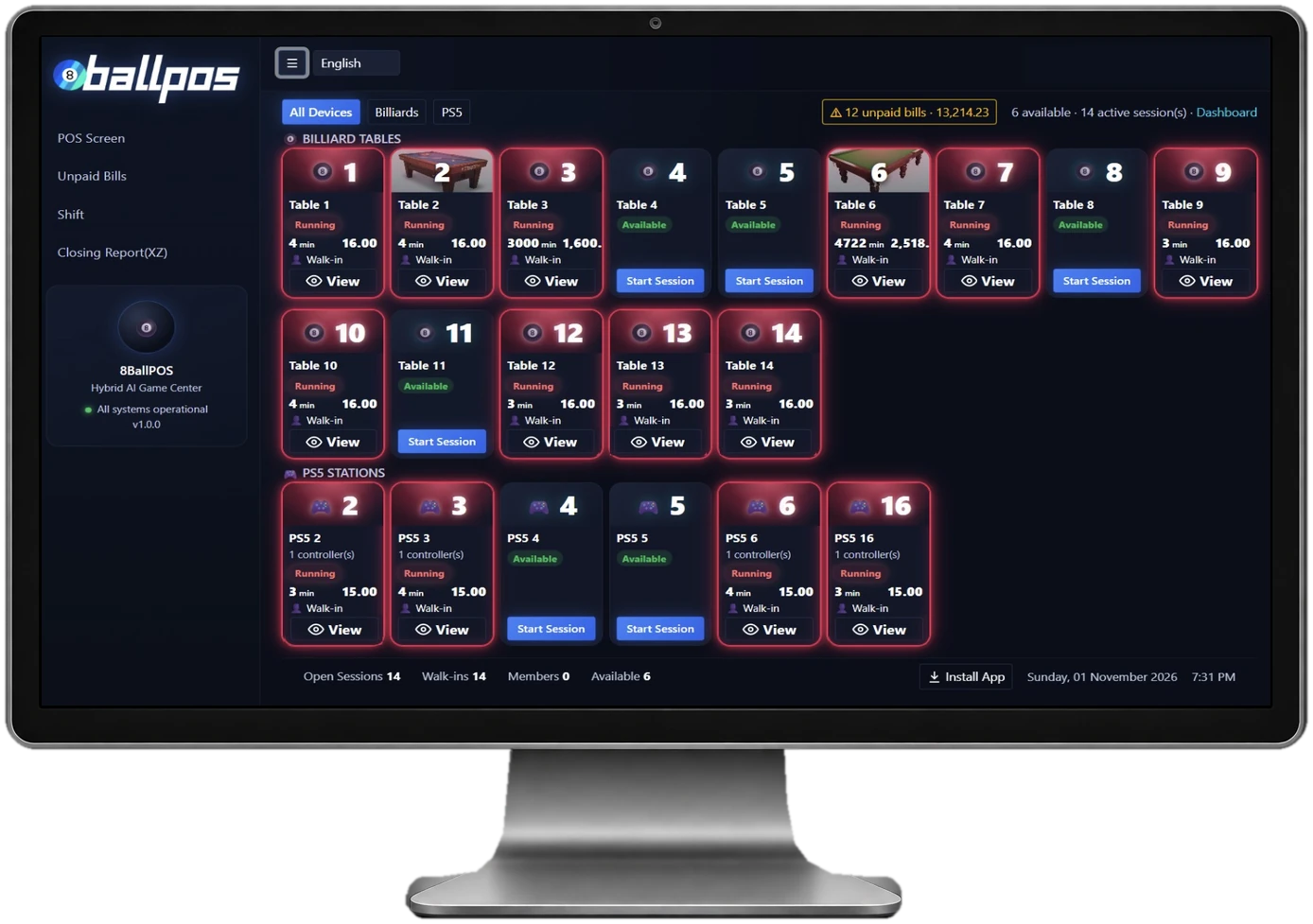
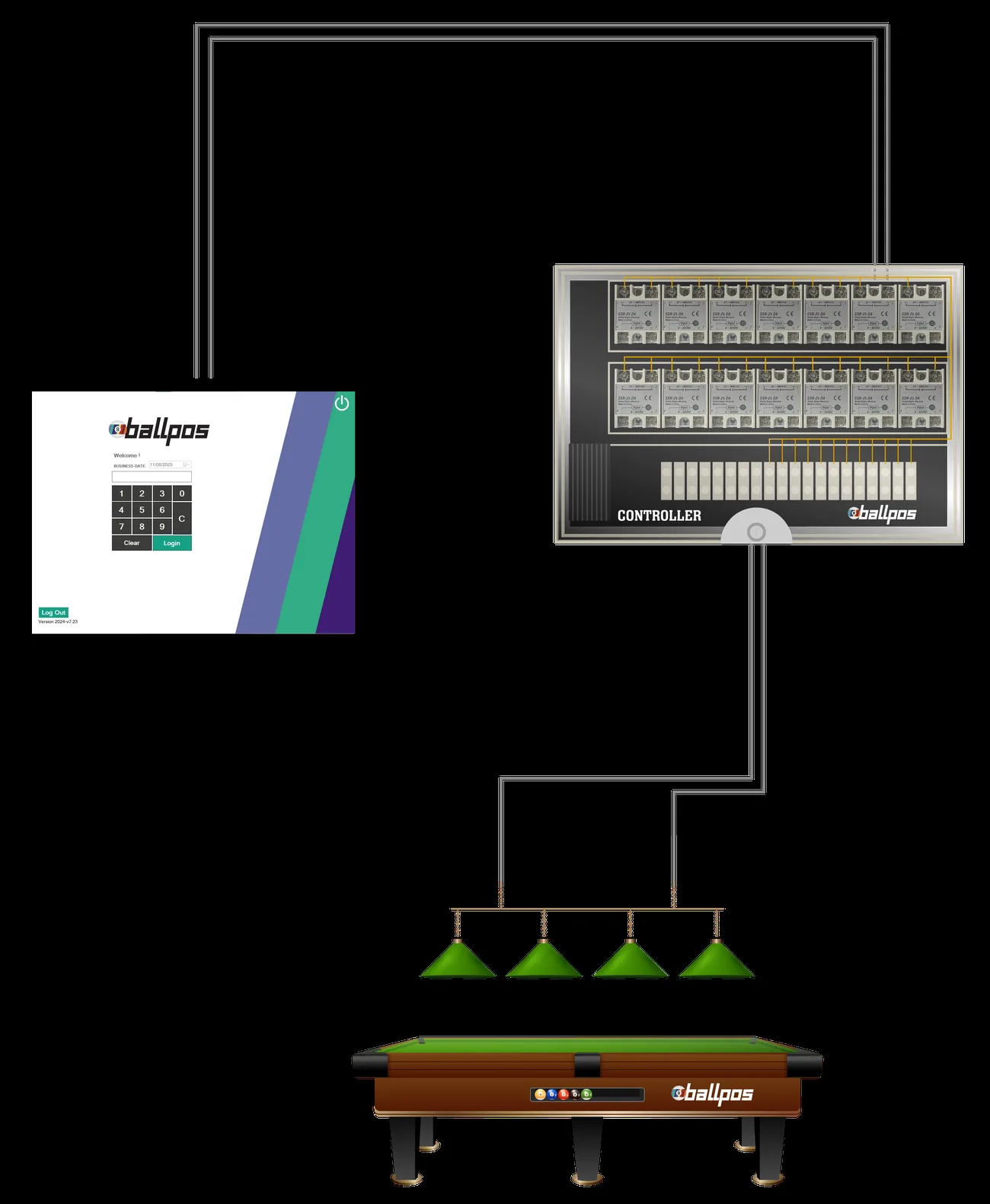
Table light control wiring
The 8BallPOS controller inside the venue drives each table's light circuit. The agent polls 8BallPOS for pending commands over an outbound connection, so no inbound ports need to be opened on the venue network.
Frequently Asked Questions
What is an automatic billiard table light controller?
A controller that switches the light over each table on and off with the game. In 8BallPOS the light switches on when the session starts and off when it stops, so the light, the timer and the bill always agree.
Does the light switch off by itself when a fixed-time game ends?
Yes. When a fixed-time or prepaid session reaches its last minute, the session settles and the light-off command is sent without anyone touching the POS.
Is the billiard light controller wireless?
No. The controller is wired to the table light circuits and connected to a PC inside the club. Only the link between that PC and 8BallPOS uses the network.
What happens if the agent PC or the internet goes down?
Commands wait for the agent to collect them and expire if it does not come back in time, so nothing switches late. The agent restarts itself if it closes and starts again with Windows after a power cut.
Can it control snooker tables, PS5 screens and court lights too?
Yes, wherever control hardware is installed. Snooker and pool tables, PlayStation screens, gaming PCs and tennis court floodlights all use the same controller.
What does automatic light control cost?
It depends on the number of tables and the controller hardware needed. Tell us how many tables you run and we will quote the hardware and the software together.
Ready to run your game center on autopilot?
See 8BallPOS live with your own venue in mind — free, usually 30 minutes. No public price list: we quote what your venue actually needs.